
Communicating effectively with team members and customers is imperative in the workplace. It is therefore essential to understand the different types of communication out there and how these types of communication can affect our relationships. To illustrate, Marshall B. Rosenberg, the founder of Nonviolent Communication, used the metaphor of jackal and giraffe communication as a central theme in his Nonviolent Communication training programs. The jackal has sharp teeth and typically tries to avoid fear and pain by way of power, aggression and manipulation, whereas the giraffe is gentle, strong and has the largest heart of any mammal. In this metaphor, the jackal represents “disconnecting” communication and the giraffe represents “connecting” communication (see Figure 1).
In the Nieuwe Bladzijde’s training program, we often leverage the continuum between jackal and giraffe communication, namely in role-playing games. Initially to create awareness about the importance of connection, and then to analyze the effect of this interaction.
In this article, I will dive into the four components that illustrate the difference between jackal and giraffe communication and how these forms of communication determine the degree of connection between you and another person.
The four components include:
- Observations versus Evaluations
- Feelings versus Quasi-Feelings
- Needs versus Strategies
- Requests versus Demands
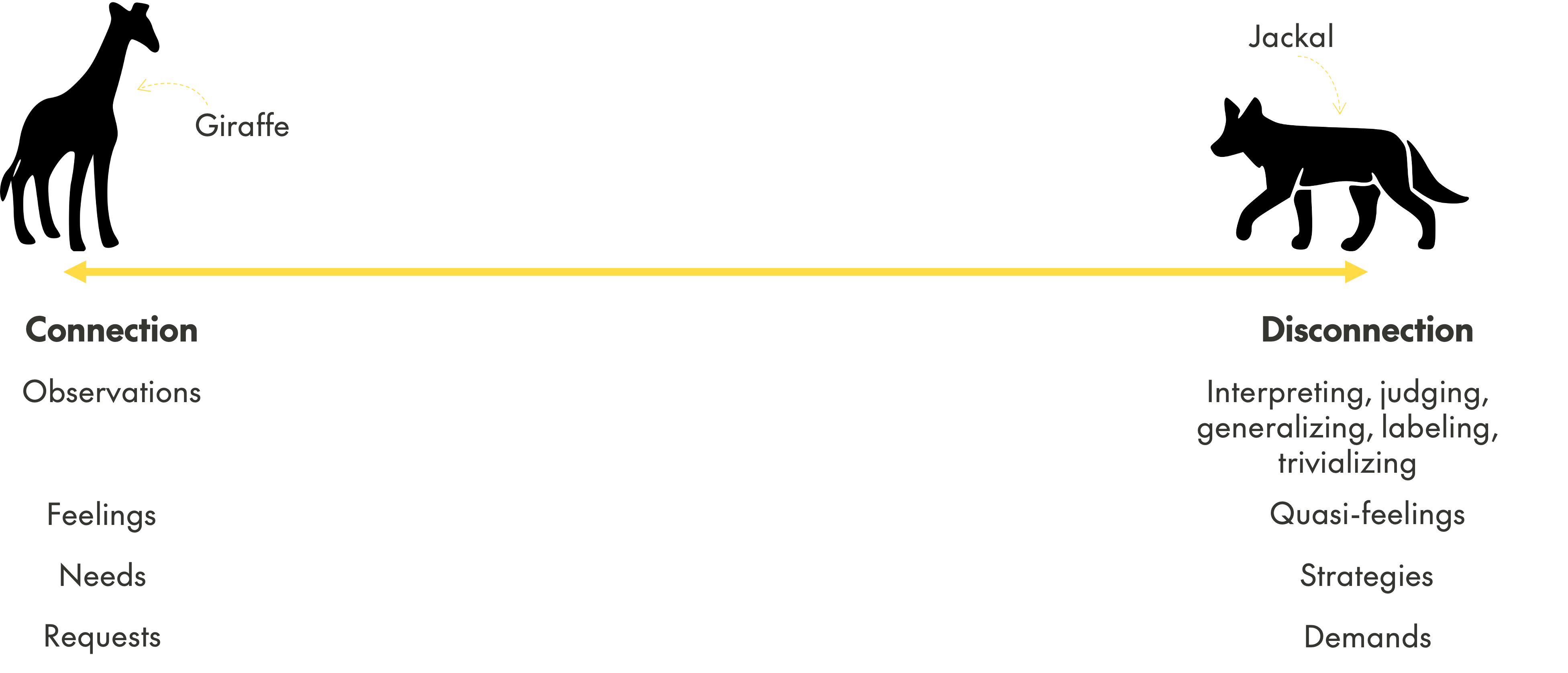
Figure 1. Giraffe and Jackal Communication.
Observations versus Evaluations
Evaluations are often used in jackal communication. These are subjective interpretations of a situation or the behavior of another whereby ‘disconnection’ takes place. With this type of communication, it is likely that there will be a discussion about details that are irrelevant to the actual need.
For example, one person might say to the other: “You’re never on time!” or “You always only do what you want”. Chances are the other person will react defensively or come up with their own accusations: “Why am I never on time? I was on time yesterday and Tuesday! As if you’re so strict about your appointments!” Other, perhaps less obvious examples of evaluations are when someone responds to someone else’s difficult situation with, “Hey, it’s going to be okay” or, if someone indicates that they are struggling as an executive, (who happens to be high up on the corporate ladder) and someone says: “At least you get paid well for it.”. The effect is often that the other person thinks that he is not understood or not heard.
Contrastly, giraffe communication uses observations: factual observations without evaluation or judgment. Examples of this include: “We agreed to meet at 9:00 and it is now 9:10” or “We agreed that you would not make any changes to the report. The chapters are organized differently now”. Observations allow us to stay connected because the other is not criticized or blamed. In practice, and especially when giving feedback, we often tend to share evaluations with the other person, which can derail a conversation or lead to a dead end at an early stage.
Feelings versus Quasi-Feelings
Jackal communication often uses quasi-feelings. These are diagnoses of the other person’s behavior, and implicitly their intentions, disguised as feelings. Common examples of this are when we say to another person that we feel “criticized,” “unheard,” “unseen,” or “attacked.” We seem to think that as long as we say it’s “just how I feel” then it’s connecting. In reality, however, this is a form of accusation: you criticize me, you don’t listen to me, you attack me. This also results in disconnection.
Giraffe communication expresses actual feelings. They express how a person is without blaming or using criticism towards another, such as feeling ‘frustrated’, ‘happy’, ‘angry’, ‘sad’ or ‘scared’. In Nonviolent Communication, the other person is never responsible for your feelings. Feelings arise when needs (see below) are met or not met. Blaming the other person for your feelings falls under jackal communication as it can be manipulative and guilt-inducing.
Nonviolent Communication makes no distinction between positive and negative feelings. After all, both help us to get in touch with needs.
Needs versus Strategies
The jackal uses strategies to achieve a certain goal. These can often be recognized by having a specific location, time, person, object or action. For example: “I want you to go to the movies with me tomorrow” or “I don’t want you to interfere with my preparation”. This can lead to conflicts as long as we don’t know which needs lie behind this. In the first case, the underlying need may be that you need “intimacy” or “connection.” In the second case, it may be about the desire for ’trust’.
In giraffe communication, you will point out the underlying needs first. These are universal and therefore shared by all. Think of needs such as ‘harmony’, ‘safety’ or ’transparency’. When you can connect your feelings to your needs, you can take responsibility for them. You can then explore together how those needs can be met. For example, going to the cinema could fulfill a need for connection, but perhaps a walk in the park together might also meet that need.
Requests vs Demands
Jackal communication often uses demands that use mechanisms such as guilt, fear, shame, threat or punishment in order to urge others to act. An example of this is if you ‘ask’ someone to clean up their stuff, or when you tell a child that you would like him to eat his vegetables (so that you can ’threaten’ to withhold dessert if he doesn’t). In these cases, giving “No” as an answer will likely cause the person who has asked the question to either pass judgment or criticize, which would be a negative consequence.
In giraffe communication, a request is made. Requests give the other person the opportunity to say “no” without worrying about any reprisals or consequences. Compassion plays a big role in this component. The goal is to find a way forward, where both people’s needs can be met by way of connection. This ensures that both can take action without regretting it afterwards. When someone says ’no’, you can investigate which need is being met that is causing that person to say ’no’.
Finally, it is important to formulate requests by stating what you want and not what you don’t want. Marshall B. Rosenberg uses a great example of a child in the classroom tapping his pen on the desk. “Could you stop tapping on the desk?” asks the teacher. “Yes,” says the child. Then the child starts tapping on his seat.
Examples of jackal and giraffe communication
To illustrate, we’ve included several additional examples of jackal and giraffe communication below.
Jackal communication: “I find it very annoying that you don’t arrive on time. Do something about it!”
Giraffe communication: “When we agreed to meet at 9:00 and you arrive at 9:15, I feel frustrated because I value honoring agreements. Would you be willing to arrive at 9:00 for our next meeting?”
Jackal Communication: “I just really don’t feel heard by you. Every time I say something you talk over me about something else.”
Giraffe communication: “When you start talking when I’m already talking, I feel disappointed and indignant, because I value being understood and recognized. I would like to ask you to let me finish first, are you willing to do so?"
As you can see these two types of communication are very distinct. But does that mean that we should avoid the jackal style of communication at all costs? Certainly not!
The jackal makes us aware that we are in pain because of an unmet need. The longer that need goes unmet, or the more important that need becomes to you (possibly even subconsciously), the more tempting it will become to communicate as a jackal. And that would be a pity, because it can damage a relationship or cause you and another person to disconnect. Practicing giraffe communication allows you to be both direct and unambiguous while staying connected and contributing to each other’s quality of life.
Would you like to learn more about this topic? Or do you want to learn more about how to practice Nonviolent Communication effectively? We’d be happy to tell you more about the Connecting Communication training at Nieuwe Bladzijde.
Learn more about Nieuwe Bladzijde
Nieuwe Bladzijde offers Agile Coaching, Professional (Team) Coaching and Training. In terms of training, you can reach out for both hard skills (e.g., Scrum, Agile, Lean and Lean-Start-up) and soft skills (e.g. Feedback, Connecting Communication and Team Dynamics). All courses are provided in both Dutch and English.
Sources:
- https://www.youtube.com/watch?v=Pd6Y136TSu0
- Mol, J. (2012). De giraf en de jakhals in ons. Beter Leven.
- Rosenberg, M. B., & Chopra, D. (2015b). Nonviolent Communication: A Language of Life: Life-Changing Tools for Healthy Relationships. PuddleDancer Press.
- Rosenberg, M. B. (2012). Living Nonviolent Communication: Practical Tools to Connect and Communicate Skillfully in Every Situation.
- Lasater, I. (2019a). Woorden die werken op de werkplek: Geweldloze Communicatie op de werkplek. Mens en Communicatie.